Asian Art Museum brings way of the Samurai to SF


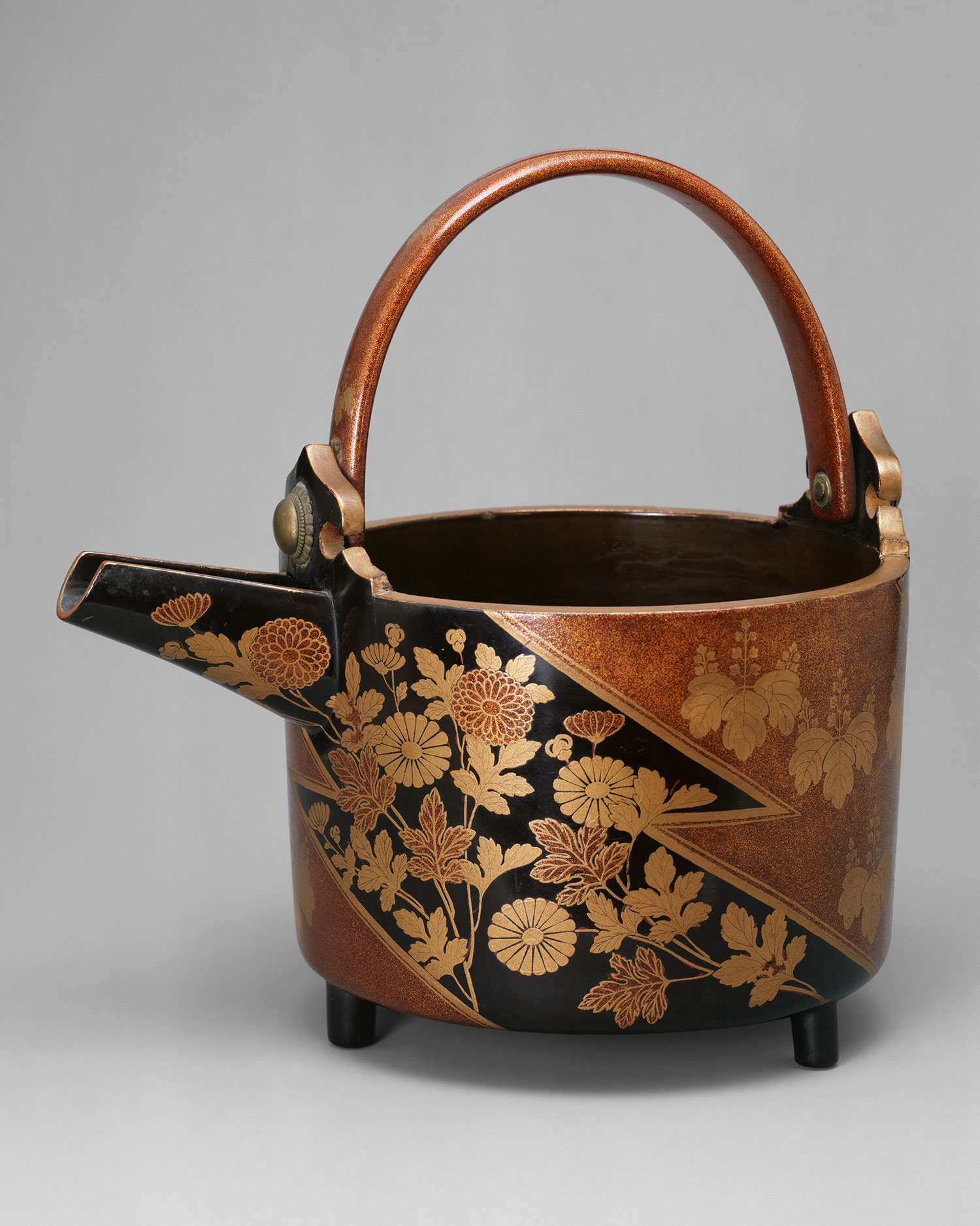
SAN FRANCISCO — San Francisco Asian Art Museum curator Yoko Woodson has organized many important exhibits — including the memorable two-part show of works by Hokusai and Hiroshige a decade ago — but the museum’s upcoming “Lords of the Samurai” may well become her biggest, most spectacular accomplishment.


Woodson brought the Hokusai/Hiroshige drawings from the Honolulu Academy of Arts’ James Michener collection to The City, making their public viewing possible for the first time, although individual pieces had been around.


With the Samurai exhibit, which opens Friday, Woodson is unlocking the key for hidden treasure none of which has been available outside Japan.


In fact, some of the 160 objects — armor, weaponry, paintings, lacquer ware, ceramics, costumes and more — are not readily available to the public even in Japan. The reason: Contents of the exhibit coming to Larkin Street are the private possessions of one family.


Woodson and former museum director Emily Sano began work on the show four years ago when former Japanese Prime Minister Morihiro Hosokawa (in office 1993-94) came to San Francisco on a business trip and visited the museum.


Hosokawa’s family is one of the most prominent Samurai clans, going back more than a half a millennia, between the 14th and 19th centuries, which were dominated by warriors who formed the country’s military aristocracy.


“This is the first time that the family’s heirloom arms and armor, paintings and decorative and applied art objects are to be shown in a comprehensive way in the United States,” says Hosokawa.


“Through the stories of the Hosokawa family, illustrated through their superb collection, we can understand the nature of the upper echelon of the warrior elite in early modern Japan,” according to museum director Jay Xu.


The Hosokawa collection in Japan is housed in the Eisei-Bunko Museum and in the family’s former home, Kumamoto Castle on Kyushu island. Ten of the artworks carry the designation of “important cultural properties” or “important art objects” due to their artistic and historical significance to the nation.


Because of their importance and fragility, some of the works will be rotated Aug. 3, replaced by others.


Besides their primary fame as elite warriors, the Samurai have also excelled in artistic, cultural and spiritual pursuits, all reflected in the exhibit.


“The Legacy of a Daimyo Family,” the show’s subtitle, refers to “great name,” meaning the standing of the Hosokawa family. Throughout 18 generations, the lords practiced and promoted the arts, even more prominently than did ancient European royal families.


Hosokawa, 71, himself is a celebrated tea practitioner, who has won acclaim for his skill as a ceramist and calligrapher. Some of his tea bowls and other tea ceramics are among the many on view in the exhibition.


From an earlier time, Sumimoto Hosokawa (1489—1520) is described as a great archer and horseman, “far above other humans ... also versed in waka [a form of Japanese poetry] and appreciates the moon and the wind.


“Outside the citadel, he takes bows and arrows; in meditation and reading of sacred books he protects Buddhism. Inside and outside, pledging to the mountains and rivers for the sake of the rulers and vassals, always with propriety and benevolence, he attains saintly wisdom.”


IF YOU GO

Lords of the Samurai


Where: Asian Art Museum, 200 Larkin St., San Francisco

When: 10 a.m. to 5 p.m. daily, except closed Mondays and until 9 p.m. Thursdays; show runs Friday through Sept. 20

Tickets: $17 general; $13 senior; $12 college students; $7 youths; discounts after 5 p.m. Thursdays; $5 first Sunday of each monthContact: (415) 581-3500, www.asianart.org

Japanese Film, Fashion and Art Center to Open in San Francisco


San Francisco already features one of America's oldest and largest Japantown, but come August 2009, it'll get a fresh infusion of modern J-Pop culture with the opening of New People, a spanking new three-story building that will feature the latest, greatest and coolest films, fashions, art and design straight from Japan. From the movie theater in the basement screening new and classic films to the fashion boutiques featuring top labels straight from Tokyo and an art gallery on the top floor, New People promises to make Japanese pop culture even more exciting and accessible to Americans than ever.


Located at 1746 Post Street (across from the Japantown Center), the 20,000 square foot New People building is currently under construction, and is scheduled to open to the public on Saturday, August 15, 2009. You can follow the progress of this project by visiting the New People website, NewPeopleWorld.com and clicking on the "News" section for the latest photos and updates straight from the site. You can also sign up to receive updates via email, so you can be one of the first to find out about events scheduled to celebrate New People's arrival in the City by the Bay.


So what can you expect to find at New People when it opens? Here's a floor by floor breakdown:
Basement: VIZ Cinema - a 143-seat theater with "high-definition digital projection and THX®-certified sound" that promises to show a mix of current and classic films from Japan, anime and live action movies and documentaries.


1st Floor: Cafe & Restaurant - New People wasted no time in getting two dining establishments that would please even the most picky gourmand to anchor their building. Blue Bottle Coffee Company is a Bay Area coffee roaster and cafe that specializes in absolutely addictive "this ain't your auntie's Starbucks" coffee and espresso drinks. There are already several Blue Bottle cafes and kiosks around town and they always attract a crowd of hardcore caffeine devotees.

Meanwhile, Delica rf-1 (one of my favorite places to eat in the San Francisco Ferry Building) offers gourmet Japanese bentos, salads and snacks that are light, healthy and tasty.
Mezzanine: NEW PEOPLE: The Store - The New People aesthetic comes together in their signature shop, which promises to offer "all that is kawaii (cute), fun, fabulous and bizarre," in apparel, books, toys, DVDs, music, design items, with "exclusive product designs and limited edition goods" to make it extra worth your while to check out items you won't be able to find any where else.


2nd floor: Fashion Boutiques, featuring Baby the Stars Shine Bright, 6% DokiDoki and Black Peace Now - You know all those fabulous fashions you've seen in movies like Kamikaze Girls or in the pages of Gothic & Lolita Bible? Now you can get the hottest styles straight from the streets of Tokyo at these three leading fashion houses. Lolita fashion house Baby, the Stars Shine Bright is opening their first flagship shop in New People. If you're into this fabulously frilly style, you like to know that Baby is looking for a General Manager to run their first US flagship shop. Also on the 2nd floor will be Black Peace Now, a label known for "mixing Japanese gothic and punk details into powerful, exquisite silhouettes." And on a lighter note there's 6% DOKIDOKI, which embodies "girl culture from the center of Harajuku!" Look for "crazy fun, crazy colors and crazy love" in their line of accessories, clothes and "objects that will stir your imagination."

3rd Floor: Superfrog Gallery - Look for modern, fun and thought-provoking exhibits to show up here. Stay tuned for announcements on the artist (or artists) who will be featured in the debut exhibit at this venue.


New People is the brainchild of Seiji Horibuchi, the founder and CEO of VIZ Media, and is fueled by a $15 million investment from Shogakukan, one of Japan's leading publishers, and part-owner of VIZ Media.


"New People is a truly unique space devoted to creativity and self expression, and will become a cultural destination unlike any other in the United States,” says Horibuchi. "New People will help nurture Japanese pop culture and also connect the public with its diverse creators. As North America continues to embrace a variety of hip trends from Japan, we look forward to expanding the vision of New People globally through film, art and other multimedia and forging innovative cross-cultural creative partnerships."


Pretty exciting stuff, right? Makes me extra glad that I call the Bay Area home that I'll be able to experience and enjoy New People often after its debut in August. Stay tuned for more updates as VIZ and New People trickle out announcements about special events that are sure to be scheduled to commemorate the opening of this new J-Pop center.

http://manga.about.com/b/2009/05/28/japanese-film-fashion-and-art-center-to-open-in-san-francisco.htm

Japanese art: Manhole covers


When you walk down the streets in Japan, you may find yourself stepping on a piece of art. Where is that art? On manhole covers! This may seem like a very bizarre place to find it, but in Japan it is very common.


Japanese manhole cover designs are unique to the locality and utility of the community. The designs may depict famous historical buildings, plants, animals, story scenes, and even cartoon characters. Whatever is famous in that area is likely going to be featured on the manhole covers.
There is a cult interest in taking pictures of these covers, and some online galleries have hundreds of photos.


So when you are walking around Japan admiring all the sights, take a minute to look down at your feet and see what hidden treasure may be there.


An extensive and well organized Japanese manhole cover gallery (Mainly in Japanese)
A flickr group pool of manhole cover photographs
Another manhole cover gallery
One more manhole cover gallery


http://www.examiner.com/x-10430-Japan-Travel-Examiner~y2009m5d24-Japanese-art-Manhole-covers

Momoyama Period (1573 - 1615)


With the decline of Ashikaga power in the 1560s, the feudal barons, or daimyos, began their struggle for control of Japan. The ensuing four decades of constant warfare are known as the Momoyama (Peach Hill) period. The name derives from the site, in a Kyoto suburb, on which Toyotomi Hideyoshi (1536–1598) built his Fushimi Castle. Unity was gradually restored through the efforts of three warlords. The first, Oda Nobunaga (1534–1582), took control of Kyoto and deposed the last Ashikaga shogun through military might and political acuity. He was followed by Toyotomi Hideyoshi, who continued the campaign to reunite Japan. Peace was finally restored by one of Hideyoshi's generals, Tokugawa Ieyasu (1542–1616).


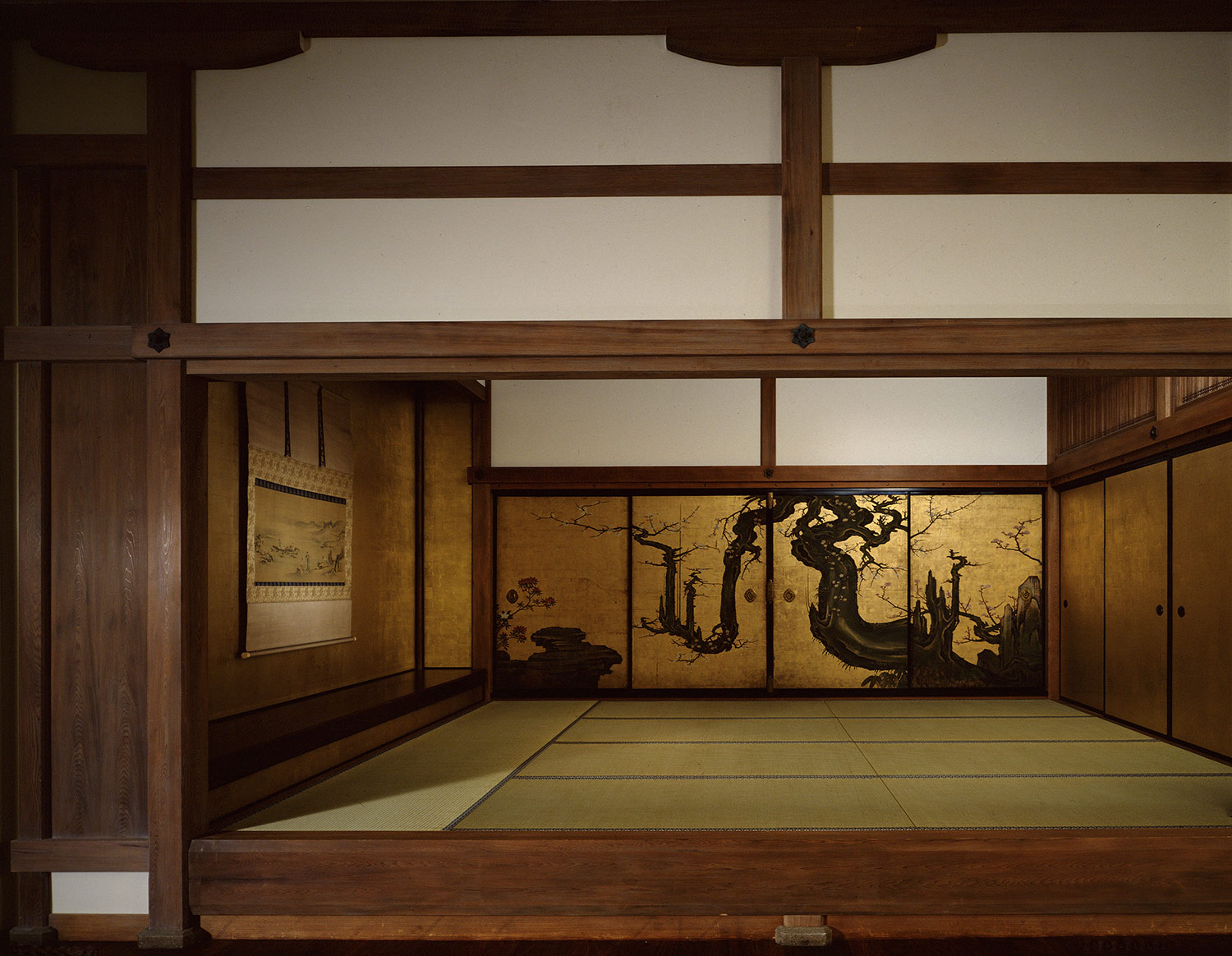
The decorative style that is the hallmark of Momoyama art had its inception in the early sixteenth century and lasted well into the seventeenth. On the one hand, the art of this period was characterized by a robust, opulent, and dynamic style, with gold lavishly applied to architecture, furnishings, paintings, and garments. The ostentatiously decorated fortresses built by the daimyo for protection and to flaunt their newly acquired power exemplified this grandeur. On the other hand, the military elite also supported a counter-aesthetic of rustic simplicity, most fully expressed in the form of the tea ceremony that favored weathered, unpretentious, and imperfect settings and utensils.


During this era, the attention of the Japanese was more than usually drawn beyond its shores. In addition to the continued trade with and travel to and from China and Korea, Toyotomi Hideyoshi instigated two devastating invasions of the Korean peninsula with the ultimate goal of invading China. The arrival of Portuguese and Dutch merchants and Catholic missionaries brought an awareness of different religions, new technologies, and previously unknown markets and goods to Japanese society. Over time, these foreign influences blended with native Japanese culture in myriad and long-lasting ways.


Department of Asian Art, The Metropolitan Museum of Art


Furoshiki--the Japanese art of folding cloth

When it comes to wrapping a package, especially for a gift, most everyone hopes to create something pleasing to the eye. A wrapping tells a lot about how special the receiver is and even more about the giver.

Bright-colored paper and handmade bows conceal each surprise. So painstakingly wrapped and so hurriedly torn open, wrappings can rarely be used a second time.

In recent years, recycling or "green" alternatives have become more of a daily routine all around the U.S. And many Old World traditions such as decorative cloth gift sacks and squares of cloth wrappings, closed with a knot, are again taking hold.

For centuries, men and women in Japan carried clothing, books, gifts and other belongings in cloth-wrapped parcels. Artsy wraps even enclosed lunch boxes and spread as a placemat during the meal. Japanese furoshiki, as it's known, is a traditional wrapping cloth ranging from hand sized to that of a bed sheet.

With renewed interest in reducing waste and protecting our environment, furoshiki adds a fun and practicality to gifts as it encourages the wrapping's reuse.

Featuring this creative style for residents of the South Hills, Mt. Lebanon Public Library plans a program at 1 p.m. Saturday, May 23.

Furoshiki: The Art, Tradition and History of Folding Cloth and Wrapping Gifts and Treasures will be presented by Rosaly Roffman, poet and professor emeritus of Indiana University of Pennsylvania.

Participants hoping to learn more about this Japanese tradition should bring a box or bottle and a square of lightweight cloth. Tablecloths or fabric remnants large enough to cover their items are good choices. Silk or polyester is recommended since both are thin and easy to knot.

"In Japan I've seen small items and even heavy machinery wrapped in furoshiki," said Rosaly.
In addition to her demonstration, Rosaly will read a few of her poems and speak on Japanese history and culture.

To continue the furoshiki trend, register for the program by calling 412-531-1912.

http://www.thealmanac.net/ALM/Story/05-20-Roamin-S-Hills-L-Gregus-1-pix-2-info-box

Japan officials promote hip home


TOKYO (AFP) — Japan's grey-suited bureaucrats have teamed up with a blue cartoon cat and Tokyo fashionistas sporting 'Gothic Lolita' urban chic in an official drive to promote hip Japan around the world.

Long famed for its cars and high-tech goods, the world's number two economy has stepped up an official campaign to promote its cultural offerings, from Tokyo city wear to video games and award-winning animation films.

Prime Minister Taro Aso -- an avowed fan of Japan's manga comics -- has thrown his enthusiastic support behind the drive to earn hearts, minds and hard cash by promoting the soft power of "cool Japan" overseas.

His conservative government has earmarked 11.7 billion yen (118 million dollars) for a museum on Japanese cartoon art and pop culture to be built in Tokyo that one English-language daily has dubbed the "anime shrine".

"It will be a centre that allows visitors to see and collect information on Japan's manga, anime, video games and media art," said Akira Shimizu, who heads the arts division at the government's cultural affairs agency.

The museum, to be built in coming years, pending parliamentary approval, is part of Aso's plan to grow Japan's cultural exports into an industry worth 20 to 30 trillion yen (200 to 300 billion dollars) by 2020.

"The word 'manga' has entered the global lexicon," Aso said as he outlined the plan last month. "Japan has materials that attract consumers around the world such as animation, games, fashion -- so-called 'Japan Cool'."

Much of Japanese pop culture has already won fans across Asia and around the world in recent years -- from classic manga characters like Astroboy and video game figures such as the Mario Brothers and Pokemon to Oscar-winning animation movies like Hayao Miyazaki's 2004 film "Howl's Moving Castle."

Manga comics -- an industry worth 4.6 billion dollars in Japan last year, according to the private Research Institute for Publications -- have long ago gone global and have won a cult following in the West.

Not all of Japan's cultural exports have won praise. Some manga comics are notorious for featuring extreme violence and sexual themes, and a video game in which players stalk and rape women has sparked outrage this year.

The government has picked the far more family friendly cartoon characters to promote Japan, and last year appointed robotic hero cat 'Doraemon' as the nation's first "Anime Ambassador".
The foreign ministry has also supported a world summit of cosplay -- short for "costume play", a subculture with a global cult following where hobbyists dress as 'Gothic Lolitas' and other often manga-inspired characters.

This year, the ministry chose three women to represent the "Lolita", "Harajuku" and "School Uniform" styles of Tokyo fashion and sent them off into the world as so-called New Trend Communicators of Japanese Pop Culture.

Takehiko Yamamoto, a professor of international politics at Waseda University, supported Japan's manga diplomacy.

"Japan has been too quiet... and hardly made itself felt" on the world stage, he said, adding that anime and manga are "one of the few ways in which Japan can exert influence on other countries".