Folding paper: Origami as contemporary art


Vincent Floderer's gorgeous construction Boom! assails the retina like a burst of intergalactic activity frozen in time, not the work of a contemporary origami artist. Instead of folding, theFrench artist's technique involves the application of watercolors and Indian ink to Wenzhou calligraphy paper, which he dampens, stretches and crumples to form jagged three-dimensional corals, sponges and other organic and abstract creations.
Boom! is among the many highlights of The Japanese American National Museum's Folding Paper: The Infinite Possibilities of Origami, the first major exhibition to look at origami as a contemporary art form. Featuring 150 works by 40 international artists from 16 countries, it is also a survey of the explosion in global origami art over the past fifty years.
Some of the show's exquisitely beautiful origami forms are the works of artists with backgrounds in sculpture, architecture or design; others trained as physicists, mathematicians and engineers. Many have turned their childhood passion for origami into complex explorations of tessellation (the creation of repeating abstract and textured patterns), modular origami and sculptural animal, insect and flower shapes. The work of the scientifically based artists has given rise to "origami math," "computational origami," and algorithms that map the way for artists to fold increasingly intricate shapes from a single sheet of paper. The exhibit also includes examples of origami's infiltration into the worlds of fashion, design, architecture, medical research, astronomy and manufacturing.
"Folding Paper" will be on view in Los Angeles through August 26, then travel to museums in Sacramento, CA; Portland, OR; Keene, NH; Peoria, IL, and Wasau, WI through August 2014. Organized by independent curator, author and educator Meher McArthur for the traveling exhibit service of the non-profit organization International Art & Artists, the show, which opened on March 10, has been the hit of the season for JANM.
McArthur, who specializes in Asian art, compares origami in Japan to woodblock prints in the late 19th century, when Japanese treated them so casually they would pack pieces of porcelain in them to send to Europe. Or to Japanese bamboo baskets, which only recently gained the status of an art form in Japan. "There was never a distinction between art and craft," she explains, although today the Japanese have adopted the Western distinction.

One artist represented in the exhibit, physicist and full-time origami artist and educator Robert Lang, has designed and catalogued over 500 original origami patterns, created origami algorithms, and invented a revolutionary new technique that allows for the addition of multiple appendages using a single sheet of paper. Lang has also applied origami techniques in his designs for a folding glass lens for a giant space telescope at Lawrence Livermore National Laboratory and an automobile air bag. The algorithms, he says, involve the principles of both algebra and geometry, and "a lot of manipulating squares and rectangles, like packing shapes in a box."
Yet Lang notes that the "growth and interest in origami preceded the heavy involvement of math," with the real renaissance occurring in the mid-20th century. Pioneer Akira Yoshizawa was responsible for turning what had been considered a children's pastime in Japan into a form of sculptural art. On March 14 of this year, Yoshizawa's birthday, Google asked Lang to design (after signing a non-disclosure agreement) the origami shapes that became this logo on Google's Web site.
The architectural portions of the exhibit include this short documentary on an origami-inspired temporary chapel, St. Loup, in the foothills of the Jura in Switzerland, and a reference to another origami-based building, the Klein Bottle House in Melbourne, Australia. Origami fashion is represented by Linda Tomoko Mihara and L.A. fashion designer Monica Leigh, and the exhibit's one installation is a menacing swarm of origami locusts made from sheets of U.S one dollar bills, by Swiss-South African artist Sipho Mabona.
Nancy Matsumoto is a New York City-based freelance writer who writes frequently on Japanese American issues and culture.

A celebration of Japanese food, art, music and dance

This Japanese meal goes beyond sushi.

The NorthWest Language Academy (in Washington) is inviting guests to an immersive evening into Japanese culture that kicks off with sushi then continues into a celebration of other Japanese food, art, music and dance.

One of the highlights of the event is watching Chef Kotaro Kumita of Seattle's Shiro's Sushi in action.

This latest installment of NorthWest Language Academy's Language of Food event, "The Riches of Japan," is to be held June 23 in Langley.

The event begins with an afternoon cooking class, from 2 to 5 p.m., that will demonstrate the techniques of sushi and other traditional favorites. The class will be led by Chef Kotaro, who studied under Shiro Kashiba, founder of the iconic Seattle restaurant, Shiro's Sushi, according to a press release. 

Chef Kotaro will prepare a traditional Japanese dinner, served family style on the language academy's garden terrace. Guests will be served appetizers, sake and Japanese beer.

While dining, guests will be entertained with traditional koto and shakuhachi music, and a performance by the Sound Singers Japanese Chorus. Kimonos, Japanese quilts and other fiber arts will be on display. Guests can ask the artists questions or take a lesson in wearing a kimono, according to press material.

The goal of this event is to have guests explore Japanese cuisine while soaking in other aspects of Japanese culture, which includes learning past traditions.

Featured artists on the program include One World Taiko Drummers, Kabuki master Mary Ohno and the Kabuki Dance Academy.

"The Riches of Japan" is from 6 to 9 p.m. June 23 at the NWLA cultural center, 5023 Langley Road, Langley, WA. Cost is $75 for dinner and performances, $45 for the cooking class.

Seating is limited; reserve your place early by calling 360-321-2101 or go to info@nwlanguageacademy.com.

NorthWest Language Academy is a nonprofit organization that promotes cultural enrichment through the study of language and culture.

To learn more about NWLA and upcoming programs or classes, visitwww.nwlanguageacademy.com. Overnight accommodations are available in the cultural center's guesthouse.
http://www.heraldnet.com/article/20120612/LIVING/706129926

A Guide to Japanese Onsen

By Paul Symonds

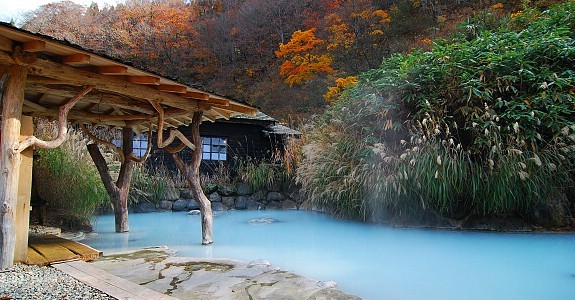
Japan is a country which sees a great deal of volcanic activity. This being the case, there are also a lot of hot springs that have cropped up around the countryside, giving to rise to the concept of Onsen. Onsen, singular and plural, are bathing places that are based on hot springs.

Onsen bathing is a variant of the sento baths; however, the distinction is very clear: Sento baths are communal bathing places that use heated water, while the water in onsen bathing places must be of volcanic origin, even if the water has to be reheated for the bath.

Onsen baths, like sento baths, were used to equalize the people in Japan, where traditionally the society had an extremely rigid, defined hierarchy. In addition to this, the onsen baths were considered to cure ailments because of the different minerals that are present in the water. In fact, waters that have different mineral contents are separated into different bathing places.

Initially, onsen attracted mainly domestic traffic, but of late it has started receiving international fame due to the relaxing nature and the healing properties that are associated with the waters. Although recently there has been a controversial ban in some onsen areas based on race and only Japanese have been allowed to enter.
There are a few famous onsen in Japan, with most of them in Hokkaido, since the area has a high concentration of volcanoes. Some of these resorts are Toya, Noboribetsu and Yunokawa. Additionally, Aomori is considered to be heaven for the true onsen lovers, with its high volcanic activity. Aomori is situated in the mountains and has every imaginable sort of onsen available.

The Hakodate Yunokawa hot springs is one of the oldest onsen in Hokkaido, dating back to more than 300 years. It is easily accessible by air through the Chitose airport. The facilities provided are comfortable and luxurious, ensuring pleasurable experience all around.


As with all Japanese traditional activities, etiquette plays an instrumental role; the original onsen baths did not allow garments of any kind inside the bathing area. However nowadays, a concession to modesty has been permitted and a swimsuit is allowed inside the waters. It is considered completely unacceptable to enter the waters when unclean or even soapy after a shower.

Advanced booking at any of the more famous onsen is a sensible course of action to follow, although the smaller ones will accommodate walk-in visitors.

Paul Symonds writes about Japenese Onsen & Sauna and Teaching in South Korea
Article Source: http://EzineArticles.com/?expert=Paul_Symonds
http://EzineArticles.com/?A-Guide-to-Japanese-Onsen&id=1248867

From Hiroshima to Hawaii, artist Teraoka looks to Asia


SYDNEY (June 5, 2012): Japanese-born artist Masami Teraoka remembers the bombing of Hiroshima as the day when he saw two suns rising -- one in the east as usual, the other an orb burning eerily in the west.
"Two suns, that's for sure. That's my memory," he explained from a Sydney gallery where his confrontational images of geishas ripping condom packets open with their teeth and naked women frolicking with priests are being exhibited.
"I'm not looking at the mushroom cloud at all, but from a distance it looked like the sun. The diameter was the same size as the sun," he said of the massive atomic explosion he viewed some 45 miles (70 miles) from Hiroshima.
Teraoka has thought a lot about the reliability of his schoolboy recollection since that day in August 1945, but he believes it is possible that his memory, even then highly attuned to the visual, is genuine.
"So I may not be totally crazy, I think this is totally right," the chatty, long-haired artist said with a laugh.
Teraoka left Japan when he was 25, after studying at Kobe's Kwansei Gakuin University, and while he credits his move away as crucial to his development, he now sees Asia at the forefront of the contemporary art scene.
Back then, moving to the United States allowed him to follow his passion rather than run the kimono shop owned by his father and grandfather.
He believes his move to Los Angeles in the early 1960s, where he studied at the Otis Art Institute, allowed him to develop.
"Actually if I stayed in Japan, I would have become a businessman," the artist, now in his mid-70s, said.
"Japanese culture is very much a conformist culture and I kind of doubt I would have blossomed the way I have blossomed and matured as an artist in the States."
More than 70 solo exhibitions later, including at the Whitney Museum of American Art, Washington's Arthur M. Sackler Gallery at the Smithsonian Institution and San Francisco's Asian Art Museum, Teraoka said China is now tackling art on a scale unseen elsewhere.
"I think Hong Kong, Beijing, Shanghai are leading contemporary arts scenes from now on," he said.
His art has also reflected the changing times -- beginning with traditional Japanese ukiyo-e "floating world" drawings and prints, admittedly with a modern take such as his 1974 "Burger and Chopsticks" about creeping western influence.
Since his move to the US in 1961, he has continued to marry East and West, with his paintings sometimes reminiscent of Northern European work from the late 15th century.
His latest pieces, which focus on sex abuse among the clergy, feature full-figured nude women and bishops and priests in large-scale paintings that subvert traditional religious iconography with modern symbols such as traffic lights, gyms, and IVF equipment.
"The themes that I am dealing with are pretty tough themes: religion and sexuality and ethics and human rights and also power against powerless people," he explained.
"So all these issues are underneath my clergy sex abuse issue paintings.
"What I am focussing on in my series is something that is not even recorded and documented but the more I kind of look into my references and historical books there are so many records ... that there are many women who were abused."
Based in Hawaii since 1990, Teraoka's work is in the collections of the Smithsonian American Art Museum in Washington, New York's Metropolitan Museum of Art, London's Tate Modern, and the Singapore Art Museum.
His pieces on display in Sydney command prices of up to US$385,000.
But he says Japanese geishas are now making a return to his work -- including in an AIDS series in which they can feature as ghosts.
"I haven't really used the geisha image for a while," he says.
"But recently geisha is becoming part of the scenario or narrative, in a sense I might be coming back to Asia, or Japan, if you would like to say that. That might be part true." – AFP

For famed sculptor, life has been a work of art

http://www.japantimes.co.jp/text/nn20120529f1.html


By MIWA MURPHY
Kyodo
BOSTON — Among the more than 100 pieces of art displayed in New York's Rockefeller Center by figures such as Diego Rivera, Isamu Noguchi and Lee Lawrie, mostly from the 1930s and 1940s, a glowing piece named "Light and Movement" by a Japanese-American artist blends into its surroundings, despite its size.
Which is exactly what its creator intended.
"My goal is always for the art to integrate successfully with the architecture," Michio Ihara said in a recent interview at his home-cum-studio in Concord, Massachusetts, near Boston.
The 83-year-old, who describes himself as an architectural sculptor, implies his hobby is work, or vice versa. He creates artistic structures both small and large, including the 3-ton "Wind Wind Wind," which was installed in central Boston earlier this year.
"When the sun shines on this, it creates a very good effect," Ihara said, looking up at the 8-meter-tall structure made with about 200 sheets of kinetic stainless steel.
This new installation and the 1978 wall sculpture at Rockefeller Center are only part of his large collection of works that decorate various buildings and public spaces not only across the United States, but also in cities around the world, including Tokyo, Hong Kong, Singapore and Auckland.
Born in Paris in 1928 to a painter father who was on a trainee program to study Western art and an accomplished pianist mother, Ihara returned to Japan with his parents the following year, settling down in Tokyo's Setagaya Ward.
Ihara said he was an "ordinary middle school kid" during World War II, just barely young enough to avoid being drafted. He spent much of the final year of the war recovering from a pneumonialike condition brought on by malnutrition and damp bomb shelter air.
The eldest of four children, Ihara said he tried to become a painter soon after the war just as "a carpenter's son becomes a carpenter."
But by the time he completed four years of study of European oil painting at the predecessor to Tokyo University of the Arts in the early 1950s, he knew the craft was not his calling.
"I began to look for my own direction. . . . Like any young graduate thrown into the real world for the first time, I was trying to establish myself, and the only way to do so was to find my own field, like finding a narrow crack in the wall," he said.
Ihara said his lifelong fascination with architectural space started around this time, even though he was not clearly conscious of it. He created an experimental group focused on stage design with a few budding artists. "There is an organic connection — playwrights, audience, performers and the stage."
Ihara then attended a lecture hosted by art critic Kazuhiko Egawa, who introduced him to the art theory of Hungarian painter Gyoergy Kepes.
Egawa talked about a light mural Kepes installed at Manhattan's KLM building, stirring Ihara's interest in new architecture. The Japanese landscape at the time, after all, was "not that far from a bombed-out field," Ihara said.
Inspired, Ihara applied for a Fulbright scholarship in 1959 to study mural art in the U.S.
To his surprise, Kepes, who was teaching at the Department of Architecture at Massachusetts Institute of Technology at the time, invited the young Ihara to come to study with him, even though his grant was intended for the art category.
"That was a turning point in my life," Ihara said.
After one year at MIT, Ihara was hired by the university as a research associate. As he broadened his artistic horizons, work started to flow in, including a 1963 commission to create and install a wall sculpture in an office building in the Massachusetts city of Waltham.
With the expiration of his visa, Ihara returned to Japan in 1964. He continued to get commissions in the Tokyo area and also taught three years at Musashino Art University's newly established Department of Architecture. At the same time, Japan's postwar economic growth kicked off, with a milestone reached at the 1970 World Expo in Osaka Prefecture.
While Ihara kept himself busy with the expo-related work, the "megasize experience" also felt to him like a "bubble inflated beyond Japan's actual scale," he recalled. He also began to feel fatigued about the cliquish culture in Japan's art world, with its heavy emphasis on personal connections.
As he was repeatedly called by Kepes to join his newly established Center for Advanced Visual Studies at MIT as a fellow, Ihara decided to move to the United States in 1970. The Hungarian pioneer of visual design became a lifelong family friend.
Ihara got the Rockefeller Center commission through a New York art agent, George Staempfli, who ran a Manhattan gallery known for a variety of European and American paintings as well as sculpture.
"His refined taste reflects that persistent Japanese craving for the cleanest possible design, for the simplest possible functional form of any given object," Staempfli wrote of Ihara's works in 1984.
Asked if traditional Japanese designs inspire him, Ihara said he has "always consciously tried not to bring Japan to the surface" of his mind, so if viewers detect Japan in his works, it is only because it exists in him "naturally."
Even after spending nearly 50 years in the United States, Ihara says he is still as Japanese as he has ever been.
"There is no problem to keep heritage alive because it's within."

Morikami Museum Gets Spooky With “Ghosts, Goblins and Gods” Japanese Art Exhibit


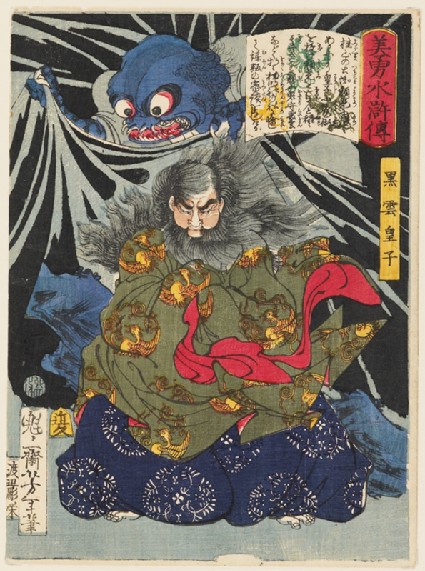
In Japan’s native religion Shinto, people share the world with spirits that inhabit humans and animals along with inanimate objects such as rocks and lakes.  The Morikami Museum and Japanese Gardens will open explores these spirits in “Ghosts, Goblins and Gods: The Supernatural in Japanese Art,” which opens Tuesday, May 22.

Consisting of paintings, woodblock prints, masks, sculptures and folk toys,  “Ghosts, Goblins and Gods” explores the thousands of spirits in Japan’s legends and myths.  Some are regarded as gods while others are seen as harmful demons and tricksters.

The mythical spirits live on today through literature, art, film and philosophy, shows such as Pokémon use the Japanese monsters as inspiration for its many characters.

Along with Pokémon, the exhibit, which runs until Sept. 16, features deities of happiness, good fortune and wisdom, including Ebisu, the god of fishermen, Daikoku, the god of agriculture, Hotei and his feminine duplicate Okame, the gods of cheerfulness.

The museum didn’t forget about the pranksters of Japanese myth, on view are the tengu, half-man half-bird creatures who abduct children and anamorphous foxes and badgers in the forest.


Source: PB Pulse
Photo Source: Eastern Art Online