More young women mastering art of giving

Growing numbers of Japanese have been showing interest in helping those in need, whether through charity or volunteer work, since the March 11 earthquake and tsunami left tens of thousands in the Tohoku region in dire situations.


But among young women, altruistic deeds started to take root even before the disaster, with many of them, often facing disadvantages at work, finding social contribution fun and hip, and something at which they can shine and feel a sense of achievement.
Some are purchasing street magazines from homeless people, while others engage in pro bono work to utilize, and even polish, their skills.
Osaka-based Big Issue Japan, which publishes magazines aimed at helping the homeless become independent by letting them sell magazines and keep the majority of the revenues, said 70 percent of its readers are women.
A young woman recently seen purchasing a copy of The Big Issue from a homeless man near Tokyo's JR Mejiro Station said she has been buying the magazine every month for six months. "For some reason, I can't help but care," she said.
"Perhaps women face more disadvantages in the workplace and other areas than men, so they can feel for others more," said Miku Sano, manager of the magazine's Tokyo office. "Some of our readers sympathize with the homeless because their fathers lost jobs."
The homeless vendors keep ¥160 of the ¥300 cover price when they sell a copy of the London-born publication, whose subjects range from entertainment to social issues.
"It's great because the relationship isn't one way in which I give and they receive, but it's an even one where I'm purchasing a product from them," said Tomoe Nagasaki, 32, who started buying the magazine when it was first published in Japan in 2003, and now works for the publisher.
"It also gave me a way to interact with homeless guys who I've long been concerned about," she added.
Women are also increasing their pro bono work, in which volunteers offer their professional skills for public services.

Meetings With Remarkable People in Japan: Eriko Horiki -- Pioneer on the Washi Frontier


Traditional handmade washi paper can be found everywhere in Japan, from name cards to beautiful wrapping paper. Until now, the largest washi never exceeded 3 feet x 6 feet long. But washi as large format installation art, using paper tapestries up to 50 feet long, brings this ancient process to a new artistic and technological level altogether.

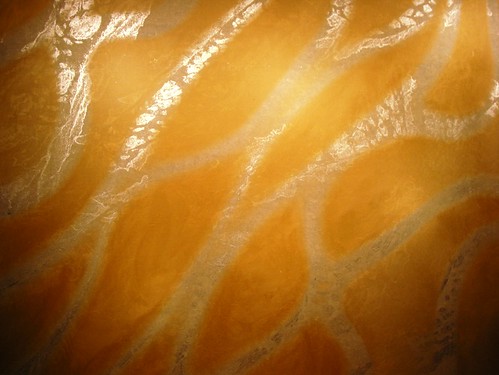
Situated in a narrow old Kyoto neighborhood is the studio and showroom of one of Japan's most successful contemporary artists, Eriko Horiki. As each distinctly different, 10 foot long sample of her washi art after another is rolled out on ceiling tracks, the paper reveals its beauty: thin fibers creating delicate swirls around tiny bits of mulberry bark, long coarse strips of bark floating dramatically in what looks like churning whirlpools. Washi's color and texture are enhanced by light, and as Horiki slowly shifts the light source from the front to the back of the piece, the fibers within the paper become illuminated and then disappear, creating an ethereal experience for the viewer.


It takes ten skilled workers to produce a piece of Horiki's large format washi -- five artists and five craftsmen in an elaborate, almost choreographed operation. Horiki explains, "Washi can be created to specifically match any architectural need or function." However, there is an additional, unknown element that always finds its way into this art. "Because the paper involves natural bark fibers floating in water, we cannot completely control the outcome of the finished work. We have come to accept nature as a part of the collaborative process."
Horiki came from neither an art nor a craft background. After working for four years in banking, she moved to the accounting department of a company that specialized in developing products made from washi. She then came into contact with professional paper artisans in the washi-making town of Imadate in Fukui Prefecture. Becoming completely captivated by the workmanship of these craftsmen, she decided to devote herself to this paper production to help ensure that washi making skills handed down over 1500 years would be passed on to the next generation. Today, you will find her works provocatively installed as walls, room dividers, ceilings and windows in restaurants, hotel lobbies, and public spaces throughout Japan, bringing drama and exceptional beauty to the surroundings.
"I was a complete amateur when I jumped into this business," Horiki confesses. "If I had had more experience, I would only have seen impossibility in the task I had chosen." But through visits to public buildings, study of their design and decoration, and sheer perseverance, her studio was born.
Public places are plagued with cigarette smoke, direct sunlight and human beings with curious fingers. Washi can tear, burn, lose color, get dirty and contract or expand, making it difficult to use as a building material. It takes as much effort to protect the washi as it does to design and create it. But Horiki likes challenges. "I have always believed that, no matter how seemingly impossible a project, if it is an idea which came from a human mind, then a human mind can come up with a solution. I must go forward and do it."
Horiki found the solutions to many potential problems through technology, sandwiching her washi in glass when necessary, and allowing the stunningly warm, soft and radiant paper to thrive in the harshest environments. But since standard glass creates distracting reflections, her team had to painstakingly innovate ways to prevent glare, all while following safety laws that obliged them to use the same shatterproof glass as in car windshields. In addition to being artists, her crew must also be scientists.

One of Horiki's most exciting projects was a collaboration with cellist Yo Yo Ma, a 46 foot long by 13 foot high single piece of washi that is the stage backdrop for his "Silk Road" concert tour, which debuted at Carnegie Hall. "Yo Yo Ma first found out about us when he saw our work here in Kyoto," Horiki explains. "We talked about the traditional and innovative aspects of washi, and new possibilities in music and stage decoration."


"The Silk Road symbolizes the connection between time and place," Horiki says, and her team worked for two months to create a set embodying the essence of the Silk Road, the ancient Asian highway which connected peoples of many cultures from east to west. For some 20 minutes during the show, the entire stage environment slowly changed as Horiki's work was illuminated through lighting techniques corresponding to the inflection of the music.
Committed to excellence, energized by challenges, talented and hard working, Eriko Horiki is an inspiring example of how traditional Japanese crafts are being reinvented as one-of-a-kind works of art for the 21st century.


Yet to a Westerner her pieces might not even look Japanese, but amazingly international. Horiki sees this, in part, as the flow of ideas enabled by our contemporary world: "People meet and are influenced by each other, people are influenced by previous eras, people from different countries influence each other. From all of this interchange comes the birth of a new culture."


http://www.huffingtonpost.com/steve-beimel/meetings-with-remarkable-_2_b_875348.html

Benton Museum Reopens With Three Shows

Emerging from a two-year construction project, the William Benton Museum of Artat the University of Connecticut in Storrs is opening its first summer exhibitions since 2009, and as if to meet pent up demand, three shows open Tuesday.
The emphasis is on a lovely collection of colored woodcuts from 19th-century Japan, combining the museum's recent gift of works focused on Japanese theater with landscapes lent from St. Joseph's College's museum, and rounded out by Benton acquisitions.
What were once printed as souvenirs of Kabuki productions now stand as art on their own, with intricate lines, swirls of patterns, alluring color and innovative printing techniques, even on the most common of images, such that the swords and metal shine with metallic-flecked paint.
Many of the images are by Konishi Hirosada, who worked in the theater community of Osaka in the early 19th century. He often presented key scenes from Kabuki productions, alongside close-ups of the actors, who were also widely known at the time. In Kabuki makeup, their often scowling faces are rendered flat, their relatively tiny hands often clenched in passion or clutching swords.
The images were acquired over the years by George Lincoln, UConn Class of 1960, and his passion for woodcuts (and for donating to college museums) was matched by the Rev. John Kelley, who collected landscapes and scenes of everyday life in Japan caught at about the same time.
His collection, donated to the St. Joseph College Art Gallery in 1966, includes Utagawa Hiroshige's 1857 New Year's image of a haunting skulk of foxes gathered below a garment nettle tree, under the stars at Oji, and several of his views of Mt. Fuji from varying parts of the landscape.
The Cat in the Hat would never be mistaken for a Kabuki actor (though it would be a good stunt for him and Things 1, 2 and 3). But a second new exhibit, "The Art of Dr. Seuss" opens in an adjoining gallery Tuesday.
It features more than a dozen iconic characters created by Springfield-born Theodor Seuss Geisel, in drawings, sculptures and paintings. Organized in conjunction with a summer performance of "Seussical: The Musical," opening on campus June 16 by the Connecticut Repertory Theatre, the exhibit also includes his own version of trophy heads and a few later, whimsical paintings.
The Benton also takes the opportunity to show off a number of works from its own eclectic holdings. "The Sum of Its Parts: Selections from the Benton Collections" range from Dutch and Italian etchings from the mid-17th century (including one from Rembrandt) to new acquisitions from Peter Waite and Alfredo Jaar. It's an opportunity to show an impressive new woodcut and relief print from 1983 by Frank Stella, "Imola Five II," which the museum was given last year. It hangs next to the previously acquired Stella, "Steller's Albatross," bought when it was new in 1977.
Representative works from Robert Henri's early-20th-century followers, known as The Eight, are on display, as are works by feminist art from Kiki Smith and Nancy Spero, among others, and a few examples of German pop art, including works by Gerhard Richter, Sigmar Polke and Dieter Roth.
The three shows run from Tuesday through Aug. 7.
Also This Week
The traditional Japanese woodcut as created by Keiji Shinohara is part of a show of five Connecticut printmakers opening Wednesday at the Slipe Gallery in Taub Hall at the University of Hartford's Hartford Art School.
"Focus on Process," presented by Paper New England, will also feature work by Bryan Nash Gill, Chet Kempczynski, Michael Levine and Robert Parker. Several of the artists will demonstrate their processes at an opening reception June 3 from 6 to 9 p.m. The show continues through June 30.
A reception is set for Saturday from 1 to 5 p.m. for "Tearing Silk," a show of recent silkscreens by Miguel Trelles at the Broad Street Gallery, 1283 Broad St., Hartford. The show continues through June 18.
Among the current shows at the UConn Health Center in Farmington are "Epic Shadows," which features Indian shadow puppets from the collection of the Ballard Institute and Museum of Puppetry at UConn, and "Nature's Watercolors," an exhibit of paintings by Sharon Kocay of West Hartford.
"Strictly Fanciful," a show of paintings by Terry Lennox, opens Wednesday at the Silver Circle Gallery in Putnam. An opening reception is set for June 3 from 6 to 8 p.m.; the show continues through June 26.
A watercolor show by Moodus artist James R. Riccio, "In Natural Light," opens at the Gallery at the Mill House in Chester Wednesday. A reception is set June 4 from 2 to 5 p.m.; the show continues through June 30.
The Paradise City Arts Festival is this weekend at the Three County Fairgrounds in Northampton. The event has been named one of the top three art fairs nationwide and the only New England event in a list of top 10 art fairs nationwide. Among the 260 artists — including 19 from Connecticut — are 40 new exhibitors. It runs Saturday through Monday.
Also in Massachusetts, a new show that may be more suited to Labor Day Weekend than Memorial DayWeekend: "The Workers," opening Saturday at the Massachusetts Museum of Contemporary Art in North Adams, features the work of 25 artists interpreting the way labor is represented today. That Mass MoCA is housed in a huge factory whose failure affected the region underscores the show's theme. A reception is set from 5:30 to 7:30 p.m. Saturday; it runs through March 12.
In conjunction with the exhibit, an area called "I Am Searching for Field Character," run by the Bureau for Open Culture operated by James Voorhies, opens today, promised to be part beer garden, part work space, part slideshow stage.
The Farmington Valley Arts Center in Avon has canceled its planned Fire It Up! Summer kick-off bash Friday because of forecasts for rain. No makeup date has been set.
>> Send news of exhibits and openings to rcatlin@courant.com.

Exploring the edible art of Japanese grilling


Cooking prime cuts of meat and other foods over live fire is considered a quintessentially American activity, the heart of many celebrations and holiday meals. In Japan, the native grilling tradition has even deeper roots -- starting centuries before Christopher Columbus ever saw his first ship.
"The Japanese Grill," by Tadashi Ono and Harris Salat, explains that in ancient times, Japanese homes were built around an open hearth, supplying warmth and a place to grill fish for the entire family. Traces of that grilling-centered diet can be found in the modern Japanese breakfast of rice, pickles and grilled fish, even if that fish gets cooked on apartment stoves.
*********
The Japanese Grill by Tadashi Ono and Harris Salat
Ten Speed Press; 184 pages, $25


*********
A thousand years of refinements and innovations have brought Japanese grilling to an edible art, where even the alignment of chicken pieces and scallions on a skewer is considered for aesthetic affect. In their second book together, Ono and Salat offer a primer on classic Japanese grilled dishes, marinades, sauces and side dishes, plus the best Japanese approaches to American grilling classics.
Yakitori -- skewers of meat, seafood or vegetables grilled over charcoal -- are "one of the most popular and beloved foods in Japan," the authors write.
The best yakitori are assembled with painstaking care, focusing on specific sauces and skewering techniques to bring out the best flavor. In Japan, as many as 30 different cuts of chicken are prepared on skewers, including livers, necks and skin. The cooking technique is a two-stage process, partly cooking the meat, then brushing on sauce that caramelizes as the food finishes.
Authentic chicken teriyaki tops the book's poultry offerings, which also include chicken as spice-rubbed wings, pounded breast cutlets, butterflied legs; Japanese-style turkey pastrami and miso-glazed quail.
For grilling fish and seafood, the book concentrates on using a few flavors to draw out the best in the ingredients. Salt-grilled head-on shrimp and whole red snapper with ponzu dipping sauce rely on obtaining top-quality ingredients.
Applying Japanese flavors and techniques to American classics like a porterhouse steak results in crossover temptations like the porterhouse with garlic-soy marinade. Cooking the meat partway, then helping the surface brown with more brushed-on marinade, promises crusty yet juicy results.
Most of the recipes in "The Japanese Grill" can be executed using ingredients found in well-stocked Western New York supermarkets or Asian markets, but shoppers may have to mail-order some ingredients, like spice mixtures, that may not be available in local stores.

NEWS FOOD WRITER

Tsunami reverberates in isle arts communities


Hawaii entertainers are altering and sometimes canceling their tours in Japan

The impact of last month's earthquake, tsunami and nuclear disaster in Japan continues to ripple through Hawaii's entertainment and arts communities.

Some of the same performers who have been donating their talents to disaster relief efforts in Hawaii have had to cancel long-scheduled shows in Japan because many venues are no longer functioning, rolling blackouts are affecting large swaths of the country, and there are understandable concerns about radiation leaks from the damaged nuclear reactors.

Add to that the still-unknown costs of rebuilding, the tremendous personal losses, and the feeling shared by many Japanese that it is wrong to enjoy oneself when so many others are suffering such a great misfortune, and it's no wonder that some entertainers have canceled their tour dates.

Jack Johnson was in Osaka for his "To The Sea" tour when the earthquake struck March 11. He performed there as scheduled several hours later but postponed his remaining stops in Sendai, Budukha, Fukuoka and Tokyo. On Friday the singer-songwriter announced he was canceling the remainder of his Japan tour because he wouldn't be able to work in rescheduled concert dates.

Johnson, who performed at the April 10 Kokua for Japan fundraiser at the Hilton Hawaiian Village, also said he is donating $50,000 to GlobalGiving's Japan Earthquake and Tsunami Relief Fund.
Grammy winner Daniel Ho said he had a tour in June that was canceled, but he will be playing dates at the end of June in Okinawa, Osaka, Tokyo and Fukuoka for the U.S. Embassy's American Centers.
"We want to support Japan in the little ways we can," Ho said Friday via email. "We have many family and friends there."

A spokeswoman for ukulele virtuoso Jake Shimabukuro said he will be going to Japan as planned this summer although a television appearance scheduled for the end of this month was postponed.
"(Jake) needed to find out whether it was safe enough to go or not," Yukari Takai said via email. "But now it seems that things got a little better so Jake has decided to go not just to do the filming but also a charity concert. … We are planning to have his annual summer tour as scheduled."

Robert Cazimero had a Japanese tour scheduled for late last month but now will be going sometime in July, according to Leah Bernstein, spokeswoman for the Mountain Apple Co. record label.
Raiatea Helm was in Tokyo with Elmer "Sonny" Lim Jr. and Bryan Tolentino when the quake hit, Bernstein added, and her tour was also cut short.

The Makaha Sons were 30 minutes from landing at Narita Airport when the earthquake and tsunami hit. Their flight was diverted to Kansai and they arrived in Tokyo the following day.
"We did one show there, (but) two other luncheon shows got canceled because they were afraid of the rolling blackouts that started, and also a lot of our fans from the affected areas just couldn't make it," said singer-guitarist Jerome Koko.

"We're still waiting to hear if we'll have any of our other shows or performances canceled. We do our northern (Japan) shows every other year, and this year all our shows are in the southern or Tokyo area. … If you had a show in the impacted areas, your show is surely canceled. For now we just send all our love and prayers to all of our family and friends in Japan."

Hawaiian music recording artist Eric Lee, just back from performing in Tokyo, is one of those who is eager to return to show his support for the disaster-wracked nation. He will perform this summer in Shinjuku, Miyazaki, Hiroshima, Fukuoka and Okinawa.

"When I was in Shinjuku last week, I did notice a diminished supply of drinks in the convenience store. Some stores were completely sold out of water by 10 a.m.," Lee said via email Friday. "But I feel it's important to keep going to directly help to help keep their spirits up and encouraging them to keep moving forward through our music and dance."

On the other hand, "Territorial Airwaves" host Harry B. Soria Jr., a popular concert emcee on both sides of the Pacific, said via email that he will not be going to Japan as usual for sakura (cherry blossom season) because of the conditions there. Soria was among those questioning whether the Japan disaster may affect attendance at this month's Merrie Monarch Festival in Hilo, which always draws a large contingent of fans from Japan.

Grammy-nominated slack-key master Cyril Pahinui said he usually travels to Japan with the winning Merrie Monarch halau, and that plans for a separate trip later this year are still on.

While he didn't have a professional engagement booked, Bill "Billy V" Van Osdol, morning announcer on Hawaiian 105 KINE, said he canceled his annual "spring break" vacation to Hokkaido after rising radiation levels were registered in the eastern coastal city of Yokusuka.

"My wife said, ‘No, we're not going,' so we canceled our personal plans," Van Osdol said Friday. "The entertainers who are still going, like Nathan Aweau, are going to places that aren't anywhere near the earthquake.

"It's hard for some of the people over there to hold concerts and activities where there's ‘joyful music,' and the closer you get to the disaster area the more likely they are to hold back. Only now with the opening of baseball and some of the other events, people are starting to see a somewhat normal lifestyle that includes entertainment like ours."

Hawaii's musicians are not the only members of the arts community to be affected by the Japan disaster. The earthquake and its aftermath scuttled plans by the Honolulu Academy of Arts to send to Japan its touring exhibit of works by famed Japanese artist and printmaker Hokusai.

"The Japanese really wanted (the exhibition)," academy spokeswoman Lesa Griffith said, but concerns about potential radiation exposure contaminating the art or harming the curators resulted in the tour's cancellation.

She could not give an estimate of how much revenue would have been generated by the touring exhibit, but said it was more important to protect the artwork from inadvertent radiation exposure.
Ironically, Hokusai's best known work, "The Great Wave off Kanagawa," shows what is generally perceived as a tsunami, although art experts say it is actually "a large wave of the open sea" and not a tsunami.
http://www.staradvertiser.com/features/featuresstories/20110419__Tsunami_reverberates__in_isle_arts_communities.html

Moon Photographer Raises Money for Japan Relief Efforts


A local photographer is holding an art sale to benefit victims of Japan's earthquake and tsunami.

If you ask Rob Larson, every little bit counts.

The Moon-based photographer set out last week with a simple goal in mind: To raise some money for Japanese tsunami relief efforts through his artwork -- no amount raised would be too modest, he said.

As the death toll from Japan's earthquake and tsunami earlier this month stretched to more than 8,000, Larson began reaching out to friend and clients. He offered them a piece of his work in exchange for a donation to Japanese victims. So far, the Moon Area High School graduate has raised a couple hundred dollars in the sale.

"I've seen a lot of artists creating things to help Japan," said Larson, who works as an editorial and commercial photographer. "Maybe creating one-of-a-kind posters or whatever medium they work in. It's really cool."

Larson said 80 percent of the cost of each piece purchased will go to an aid organization of the donor's choice, including the American Red Cross and Global Giving. All of the donations are processed through PayPal.

"I know that with Japan it's not exactly the same thing as with Haiti, where they desperately need money," he said. "But it's so easy to forget about a thing like this when it falls out of the news."

Larson, whose portfolio ranges from portraits to surreal landscape photos, said he's never before used his art to raise money for a cause quite like the disaster in Japan. News of the devastation left after the earthquake and tsunami, however, prompted to him to get involved.

"Not to be crude, but it's sort of like dangling a carrot in front of people," Larson said. "They get a cool print and a piece of art and hopefully we can help the relief effort."

To donate or learn more, visit Larson's website.

http://moon.patch.com/articles/moon-photographer-raises-money-for-japan-relief-efforts#photo-5341872

By Jenna Staul | Email the author | March 21, 2011