Craig
Learn about art in Japan, art schools in Japan, art colleges in Japan, music in Japan, modern Japanese art, classical Japanese art and all other things art in Japan!
Japanese Earthquake Relief
Craig
Top 10 reasons to visit Niigata, Japan
During 1964, my grandfather Ben Levy, a Galveston businessman, had the extraordinary opportunity to visit Niigata, Japan, shortly before it became our official sister city. My grandfather was an active member of Galveston Rotary and planned to attend several Rotary meetings as he journeyed through Japan.
Plans to establish a sister city relationship were under way when then Mayor Edward Schreiber learned of my grandfather’s trip, so he asked him if he would be willing to make an overnight stop in Niigata to personally deliver “greetings.” My grandfather was thrilled to take this excursion and thoroughly enjoyed being introduced to the Niigata community.
Just recently, my son Stewart and I joined the privileged few from our island who have actually visited our dynamic sister city Niigata, and it was an experience I will forever treasure.
Stewart is a junior at George Washington University in Washington, D.C., where he is majoring in Japanese and minoring in business. For the past six months, Stewart has lived in Nagoya, Japan, where he is a study-abroad student at Nanzan University.
Last summer, while serving as an intern for Mayor Joe Jaworski, Stewart learned more about Galveston’s sister city relationship with Niigata. With the help of Patricia Bolton-Legg, former councilwoman and current chairwoman of the Galveston-Niigata committee, and her contact Jonathan Carll, who works in the foreign affairs division for the city of Niigata, Stewart and I visited the fair city during the first days of 2011.
There are dozens of compelling reasons to journey to Niigata, but here are our top 10:
1. Mayor Akira Shinoda and his four senior staff members of the foreign affairs division welcomed us with numerous, thoughtful gestures, including the flying of the American flag outside city hall on the day of our meeting.
Foreign affairs staff members included Ms. Hiroko Saito, Mrs. Keiko McGinty, Mrs. Naoka Yamamiya and Mr. Kazunori Yoda, who chairs the Galveston-Niigata committee.
During our meeting, I learned Mr. Yoda traveled to Galveston after Hurricane Ike and personally delivered funds, which were used to purchase replacement trees for our city.
While Niigata has relationships with other sister cities, their relationship with Galveston is the most long-standing, and they truly are invested in our continued recovery.
They had numerous questions about the recovering of our hotel industry as well as the revival of the Historical Strand District. It was heartwarming to have the opportunity to talk with them, and they made our trip to their city worthwhile, in and of itself.
2. The ANA Crown Plaza Hotel, where you can begin your day with freshly baked, thickly-sliced Texas-style toast. It was memorable and delicious.
3. The Cave D’occi Winery, part of a first-class property that cultivates rows and rows of European-style grape vineyards.
Since freezing cold temperatures prohibited us from touring the grounds, we visited the gift shop where I discovered the most delicious apple-raspberry preserves I have ever tasted. I wish I had purchased more jars.
4. The World Class Spa adjacent to the winery. We briefly talked with a husband and wife who were celebrating their anniversary and enjoying a couple of nights of pampering there.
5. The 130-year-old, award-winning Takarayama Sake (Japanese rice wine) Brewery. Our guide was the great-granddaughter of the original owner, and his portrait was proudly displayed in the sake tasting room. The sake was light and dry, and delightful to sample as we watched the snow falling on that picturesque winter afternoon.
6. Dinner at Bistro Tsubaki (Tsubaki means camellia), which specializes in sweet Nanban prawns. We were welcomed by long-standing members of the Niigata-Galveston committee.
In addition to Mr. Yoda, we were introduced to Mr. Kenji Nagai, Mrs. Fujiko Tanaka, Mrs. Naoko Yokoyama and Mrs. Yukari Omori.
Mr. Nagai spoke fondly of his meetings with former Mayor Jan Coggeshall and civic leader Don Hubbell. Mrs. Tanaka happily reminisced about being a houseguest of Joan and John Hyatt and told us she really enjoyed Dickens on The Strand.
You could not ask for more delightful dinner company, and we will never forget the hospitality.
7. The new concept shopping center, which included state-of-the-art fish markets, grocery stores and diners. At the grocery store, samples of home grown Nagoya pears were available to taste. They were juicy, tasty and are known for their sweet smell and smoothness.
The grocery store featured local specialties such as packaged pear pastries for purchase. If you love pears as much as we do, you will not want to miss this variety.
8. The small and cozy Ramen Noodle Diner with a single counter that seats 10 customers at one time. We walked in, selected our favorite flavor of Ramen from a handy vending machine, took our seat at the counter and, minutes later, were served piping hot and delicious Ramen soup. Such an efficient operation and a wonderful, hearty treat for us.
9. Shirone Giant Kite History Museum, which is the largest kite museum in the world and houses a collection of kites from all around the world.
10. And, the former Niigata Customs House, which was built in 1869 to coincide with the opening of the Niigata port, one of the five major ports opened to foreign trade at the time.
Our 48 hours in Niigata were over before we knew it, and Keiko, Naoko and Jonathan escorted us to our departing train. Without hesitation, they boarded the train with us, secured our luggage and proceeded to hand-select the seats they believed would provide the most beautiful view of the upcoming, snowy countryside.
After Stewart and I settled in our seats, I glanced out of the window and saw Keiko, Naoko and Jonathan patiently waiting outside, warmly waving goodbye. During our visit, they attended to our every imaginable need, placed all their responsibilities on the back burner and made us feel so incredibly welcomed.
Visiting Niigata was a dream come true for Stewart and I, and I hope to return again to experience the unforgettable hospitality.
Sharon Levy Pagan lives in Galveston.
Lisbon’s Orient Museum to host Namban Art exhibition
The Orient Museum in Lisbon has launched an inaugural exhibition on 'Namban art', a rare collection of over 60 pieces of 'Namban' furniture, textiles, arms and paintings.
The Portuguese were the first Europeans in Japan and 'Namban art' is any artistic expression from Japan and China in the 16th and 17th centuries that resulted from the influence of these European sailors.
With artefacts dating back to 1640, this exhibition in the Orient Museum is titled "Namban Commissions: The Portuguese in Modern-Age Japan," and includes rare pieces from various collections, including extraordinarily-illustrated screens and military masks.
This exhibition is divided into four sections with the first section focusing on 'The Art of War'. The arrival of the Portuguese in Japan in1543, coincided with a period of great political instability in the region, and the exhibits in this section of the exhibition are a product of the civil war that devastated the country for more than a century.
The second section focuses on 'Kirishitan' Art. Kiritishan means 'Christians' in Japan, and this section of the exhibition displays items linked to the presence and the actions of Christian missionary religious orders in Japan - inlcuding military objects associated with the great Japanese lords who had converted to Christianity as well as items designed for Catholic worship and liturgy. The exhibition also features a section dedicated to objects that reflect the influence that Namban art has had from other cultures and geographical contexts, namely Gujarat in India and China.
The exhibition is open until 31st May 2011.
http://www.easier.com/83722-lisbon-orient-museum-namban-art-exhibition.html
Indoor Grass Art Frames
The Indoor Grass Planter series, from Japan-based Metaphys’ products, brings greenery into your home. The planters were created to replicate picture frames in square, rectangle and circular design shapes. The mini-gardens are designed for people with a love of gardening.
“We designed planters to enjoy the contrast between the plants planted and a scenery picture shown on the planter. You can select whether to hang it on the wall or place it on the table,” explains Metaphys.
Visit: http://www.metaphys.jp/
Is Japanese manga moving into mainstream art?
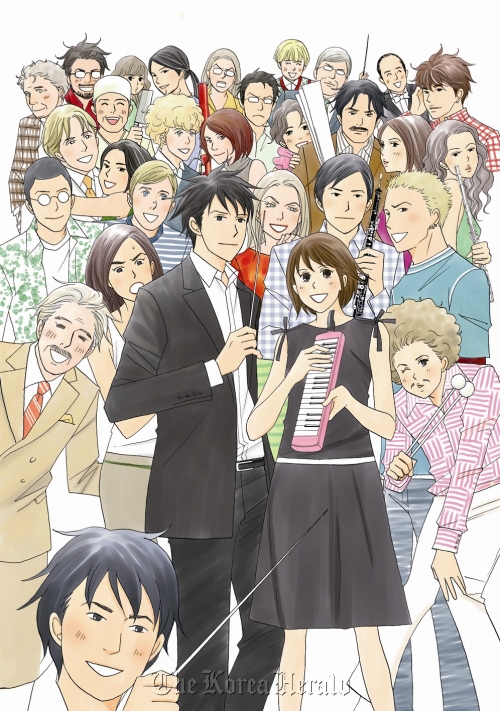
While manga is one of Japan’s most powerful mediums, with a huge influence on many industries including publication, film, games and even electronics, the art world has never quite embraced it as high art.
Unlike in some exhibitions fe aturing comic strips which simply display the original illustrations, exhibition designer Toyoshima Hideki created something like a 3-D realization of the comics by adding whimsical props and installations that look like they just popped out of the comic books.
The section dedicated to Wakaki Tamiki’s “The World Only God Knows,” for example, is presented like a classroom with a chalkboard, a lecturn and 12 desks and chairs, just like it is illustrated in the comics. Brief introductions on the characters are written on the board in adorable handwriting.
The complete collection of the comics featured in the show are on display on the first floor of the museum. A guide book is distributed to visitors so even those who are not familiar with the original works are able to get a picture of what they are going to see before jumping into the sea of 3-D realized imaginations.
The exhibition runs through Feb. 13 at Artsonje Center in Hwa-dong, central Seoul. Tickets are 1,500 won for students and 3,000 won for adults. For more information, call (02) 733-8945 or visit www.artsonje.org/asc.
By Park Min-young (claire@heraldm.com)
Holy comicbook exhibition, Batman!: Japan's artists put their own twist on America's iconic superheroes
Cristoph Mark / Daily Yomiur Staff Writer
In a publishing market so dominated by illustrated stories--i.e. manga--it is sometimes surprising the only exposure Japanese audiences have to American comicbook superheroes is in the form of blockbuster Hollywood movies.
Using that very point of entry, Parco Factory's latest exhibition, DC Comics Super Heroes!!!, explores a small but significant corner of that increasingly popular American art form.
"We felt this exhibition would be a good way for light fans who became interested in America's comicbooks through films to learn about the genre in an accessible, fun way," says Rui Shigeto, who curated the exhibition.
The show covers the history of some of America's favorite comicbook heroes: Superman, Batman, Wonder Woman and Green Lantern (most of whom have appeared in film). Starting with the Golden Age (ca 1938-1952)--which was heralded by the appearance of Superman in Action Comics No. 1, and later introduced Batman in Detective Comics--a number of replica covers from each era illustrate the changes in artistic attitudes and societal norms.
Each of the major turning points in comicbook history--which also include the Silver Age and the Modern Age--is marked by a distinct approach in terms of both artistic style and story content. Early stories were a bit on the dark side, before taking a turn for the camp during the 1960s. Later, characters struggled with issues such as drug abuse and, in the case of Frank Miller's brilliant The Dark Knight Returns, nuclear war and misplaced patriotism. As one might imagine, a dark realism--both visually and thematically--has taken hold in the Modern Age of American comics.
Hanging on the walls of the exhibition space are recent issues of series dealing with these classic characters, each of them handled by a different writer and artist. Grant Morrison's Old West version of Batman, any one?
"I think one of the interesting things about American comicbooks--as opposed to Japanese manga--is that different artists [and writers] handle the same character, thereby giving the art a different flavor and the storylines a different structure," says Shigeto. "In Japan, you would never see several mangaka taking on the same character's story."
For Super Heroes, however, Japanese artists get to do exactly that: 22 artists and designers try their hands at re-envisioning these classic icons. Shunya Yamashita, who designs game characters, imagines Batgirl, Wonder Woman and Catwoman as kawaii sexpots straight out of anime; illustrator Hiroki Tsukuda applies traditional Japanese craft to an ink recreation of the Batmobile from the recent Batman films; and the designers at Be@rbrick turn Batman into its trademark cute bearshaped toy.
"We wanted to make use of the various styles, genres and ages of the participating artists--which include graphic designers and mangaka, among others--as a filter through which to view the world of American comicbooks," Shigeto says. "I feel that this varied mix really resulted in a particularly 'Tokyo' sensibility. This is an exhibition that really only could have been done here in Japan."
But the most famous redesigns of America's comicbook superheroes have been done by film studios, and there is no shortage of memorabilia on hand at Super Heroes. Among the many items are Val Kilmer's cowl from Batman Forever, Brandon Routh's glasses from Superman Returns and Batmobile and Batwing models from 1989's Batman. And the most impressive of all: the rhinestoned "S" from Marlon Brando's costume for 1978's Superman.
"DC Comics Super Heroes!!!," until Dec. 19, 10 a.m. to 9 p.m. at Parco Factory in Shibuya, Tokyo. Admission is 300 yen, with student discounts available. For further information, call (03) 3477-5873 or visit www.parco-art.com.
-
This beautiful photo is from the Takaragawa Onsen. Enjoying a hot, relaxing soak in the onsen while snow piles up around you is a "must...
-
It is a little known fact that before the samurai of ancient Japan incorporated the sword into their martial arts training, the samurai pr...
-
READING, Pa., Nov. 26 /PRNewswire-USNewswire/ -- The works of Edgar Degas were deeply influenced by Japanese art, yet surprisingly, there h...